
Enable Banking Changelog | December 2025
As always, if you have any questions, feel free to reach out to us at support.api@enablebanking.com.
Significant Changes and Updates
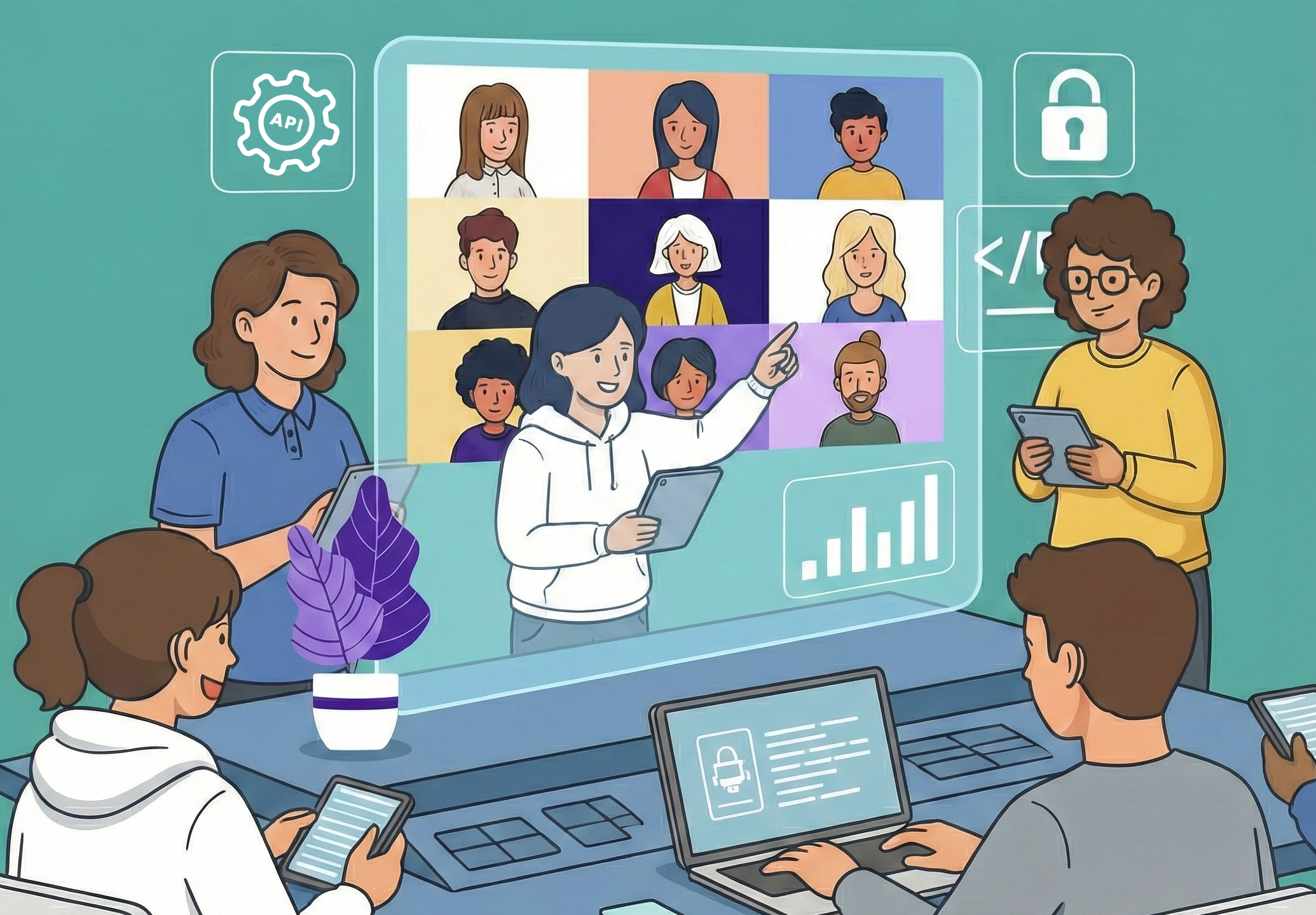
Demo Session: Control Panel Walkthrough #2
We’re extending our Control Panel demo sessions with a second live walkthrough in January!
Join us to explore how to make the most of our self-service tools, with practical guidance and tips on:
Control Panel basics (sign-in, MFA, menus, etc.)
Debugging and monitoring integrations
Analysing API data effectively
Managing API applications (registering, editing, sharing, and approvals)
Navigating API request logs and interpreting errors
Viewing ASPSP statuses
Exploring data insights
January session:
🗓 Wednesday, 28 January · 1:00 – 1:45 pm (UTC+2)
👉 Register here (We only require email, so we can send a calendar invite).
Are you already familiar with the Control Panel? This is still a great opportunity to catch up on our most recent updates and share feedback.
Internal Monitoring System Enhancement
We’ve expanded our internal toolset to centralise and improve internal monitoring capabilities to support the scale of our API. With over 2,500 Open Banking APIs in active operation, robust monitoring is essential for maintaining product quality and service continuity.
New monitoring dashboards provide deeper visibility into connection quality, including metrics such as authorisation success rates, traffic volumes, and API latency across ASPSPs. This enables faster issue detection, reduced time-to-fix, and more stable performance. Resulting in a minimised downtime and a smoother experience for our customers and end-users.
Public Terms of Service
We’ve introduced public Terms of Service governing the use of the Enable Banking Control Panel and API. These were communicated earlier this week via an email to Control Panel users. In short:
Existing licensing or partnership agreements remain unchanged and take precedence.
Personal usage, Sandbox and evaluation usage continue to be free of charge.
Internal business use in the restricted Production Environment continues as before, with pricing discussions handled separately where relevant.
📄 The full terms of Service are available at: https://enablebanking.com/terms/. If you have any questions regarding these changes, please contact us at support.api@enablebanking.com.
New Integrations
We’ve expanded AIS/PIS coverage with new integrations:
Bigbank (EE, LT, LV) - AIS integration
Extended Integrations
🇮🇸We’ve added domestic payment support in Iceland:
Arion banki (IS)
Kvika (IS)
Landsbankinn (IS)
We’ve also added the following payment methods:
Tatra banka (SK) added SEPA, INST_SEPA and CROSSBORDER
Raiffeisen Bank (SK) added SEPA, INST_SEPA and CROSSBORDER
S-Pankki (FI) added INST_SEPA
Alandsbanken (FI) added INST_SEPA
Fixed and Improved Integrations
We’ve rolled out reliability and performance improvements across multiple ASPSPs, including:
Abanca (PT)
Aion Bank (BE, PL)
American Express (FR)
BAWAG (AT)
Banca Popolare di Puglia e Basilicata (IT)
Banca Popolare Pugliese (IT)
Bank van Breda (BE)
Banque CPH (BE)
Belfius (BE)
Beobank (BE)
BNP Paribas Fortis (BE)
CIC Banque Privée (FR)
Comdirect (DE)
Crelan (BE)
easybank (AT)
Europabank (BE)
Gránit Bank (HU)
Handelsbanken (SE)
HPB (HR)
HypoVereinsbank (DE)
KBC (BE)
Klarna (SE, DE)
Luminor (EE, LV, LT)
MBH Bank (HU)
Medicinos Bankas (LT)
Nagelmackers (BE)
OP (FI)
Rabobank (NL)
Raiffeisen Bank (IT, RO, SK)
S-Pankki (FI)
SumUp (AT, BG, BE, HR, CY, CZ, DK, EE, FI, FR, DE, GR, HU, IT, IE, LV, LT, LU, MT, NL, NO, PL, PT, RO, SK, SI, ES, SE)
Tatra banka (SK)
vdk bank (BE)
Zagrebačka banka (HR)
Ålandsbanken (FI, SE)
Integrations removed
Etne Sparebank (NO) - merged with Sparebanken Vest
Bankhaus J. Faisst (DE) - acquired by Yapi Kredi
For a comprehensive list of integration changes, click here
Explore More:


At Enable Banking, we built an internal AI chatbot that lets our team talk to our documentation. Using a Retrieval-Augmented Generation (RAG) setup, we taught AI to fetch the right answers from our docs, fast, accurate, and with real business value. Here’s how we did it, what we learned, and why we believe AI can make internal knowledge tools both smarter and more human.